
The City’s New Face
And Their Children After ThemThis flow traces Heillange’s effort to replace industrial identity with leisure, retail, and redevelopment while its underlying crisis persists.
increasing Bearing strength in each event
 decreasing
Bearing strength in each eventdecreasingThe Furnace Remains
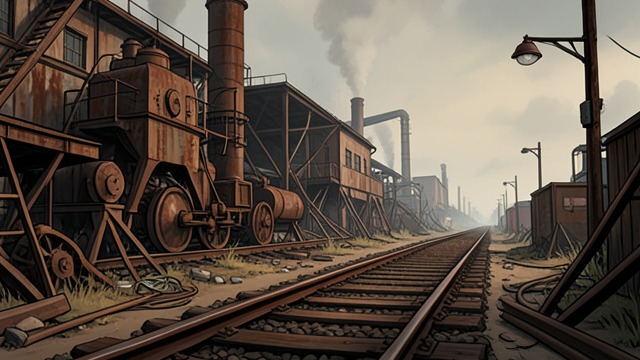
Ruins of Production
A physical inheritance
The abandoned Metalor complex dominates the town’s landscape. Its machinery and rail lines recall a period when industrial production connected Heillange to a wider economy.
An uncertain future
Children enter the ruins with slingshots while officials discuss possible redevelopment. The site remains both a hazard and a symbol of lost work.
Tourism as Policy
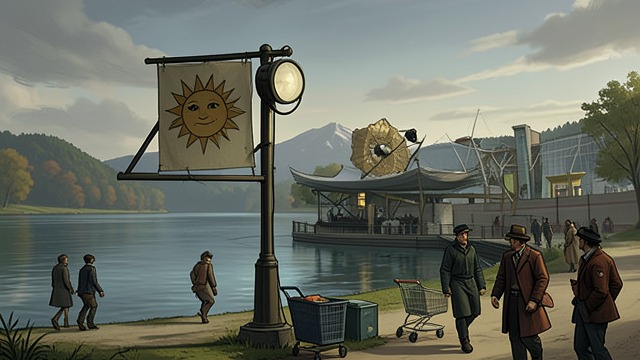
Selling the Landscape
A new development vision
Local officials promote the lake, countryside, campground, and sports facilities as economic assets. Public speeches describe leisure as the future of the valley.
The gap in the promise
Plans for visitors and events offer an attractive story, but residents still face insecure work and limited prospects. The transformation is more visible in policy language than in ordinary life.
Retail Moves Outward
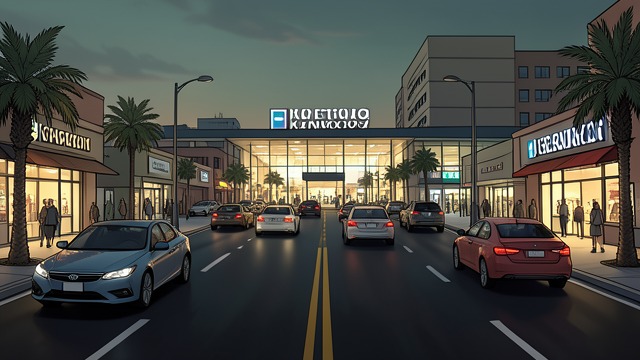
New Commercial Zones
Shopping at the edge
Large stores and retail parks expand beyond the older center. Families can buy more goods and spend leisure time in commercial spaces designed around cars.
A changed townscape
New roads, roundabouts, and colorful renovations reshape Heillange. The modernization brings convenience while making the historic center and former industrial life seem increasingly distant.
The Enlarged Leclerc
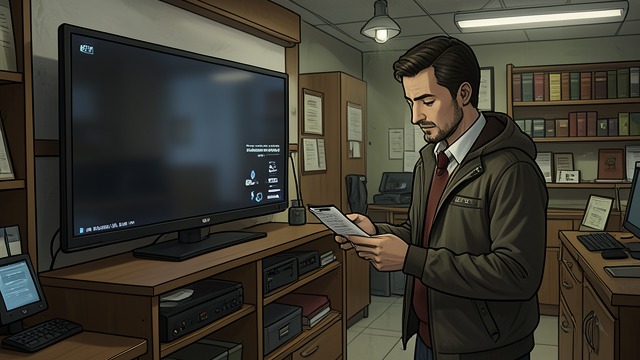
Consumption as Confidence
A crowded opening
An expanded E.Leclerc draws shoppers with discounts on electronics and household goods. Anthony buys a large television on credit as the store promotes France’s World Cup success.
Prosperity on installments
The purchases create a feeling of participation in a modern future, but Anthony’s finances are already strained. Consumer abundance does not equal economic security.
A Brightened Facade
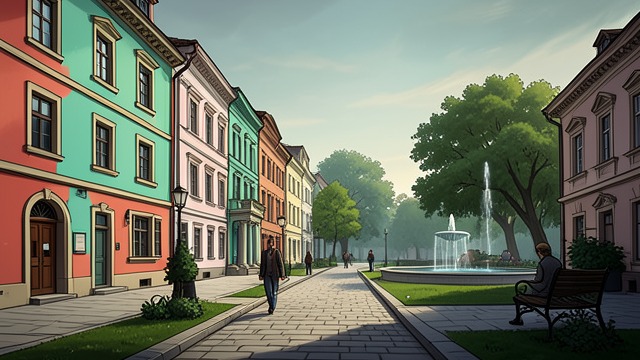
Renovation and Erasure
Color replaces gray
Buildings across the area receive bright new paint as the town invests in pedestrian streets, paths, and visitor attractions. The renovated landscape gives Heillange the appearance of a theme park.
The past remains underneath
The old factories and their histories persist beneath the refreshed surfaces. Progress changes what residents see without resolving the losses that shaped the town.
The early 1990s
By the mid-1990s
1994–1998
July 1998
By summer 1998
